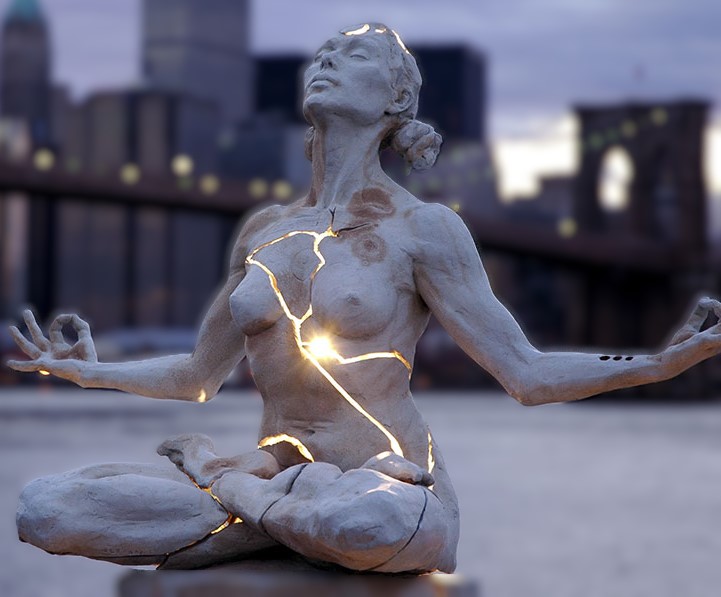
practicing Yoga today for true well-being
In the stereotype of our pop culture, yoga is often reduced to extreme gymnastics or a series of spectacular contortions. The classic image of the smiling practitioner sitting cross-legged with closed eyes suggests an activity linked to fitness, competition, or show. In this model, after great physical effort, one becomes a simple consumer of the wellness sector, searching for the perfect solution. However, this vision does not reflect the original idea of yoga at all.
Practicing Hatha Yoga today means embarking on a much deeper journey, which takes place within one’s physical sensations, emotions, and ability to feel. It is the art of performing actions more consciously and efficiently, supported by a free and focused mind. Hatha Yoga is not an end in itself, but a means to discover new forms of inspiration that allow one to maintain and expand daily practice, transforming it into an act of care for oneself.
This discipline integrates perfectly with other activities such as running, climbing, acrobatics, and dance precisely because it offers a new and internal way of moving. Instead of forcing the body, one studies the movement that unites positions in fluid sequences, allowing the discovery of an efficiency that goes beyond simple muscular strength. This practice extends awareness beyond the physical plane, touching the emotional, mental, and spiritual spheres to restore inner harmony and joy.
The result is a relaxed body and a reactivated vital energy. Yoga acts as a form of self-healing, reducing pain, anxiety, and chronic fatigue through a deep relaxation of tissues and organs. It is an intrinsically non-competitive and non-violent practice that recharges the body and spirit by exploring unexplored mobility and freeing oneself from the limits of habitual postures. At the center of everything lies the training of balance, strength, and the center of gravity, based on the spontaneity of movement and the constant exploration of breath.
For those who want to approach this world, there are different paths. Hatha Yoga remains the technical basis for studying positions and their historical meaning. Pranayama offers essential breathing techniques to purify the body and rediscover contact with the breath. Yoga Nidra leads to deep relaxation and guided meditation for a clearer vision of oneself. Flow Yoga unites positions in fluid sequences to develop soft strength, while Acro Yoga explores balance and trust through partner work. Finally, Thai Yoga Massage combines stretching and pressure to release physical and emotional tensions.
If you are looking for an approach that goes beyond the surface and naturally integrates strength, flexibility, and awareness, I invite you to contact me to explore together the path that is right for you.